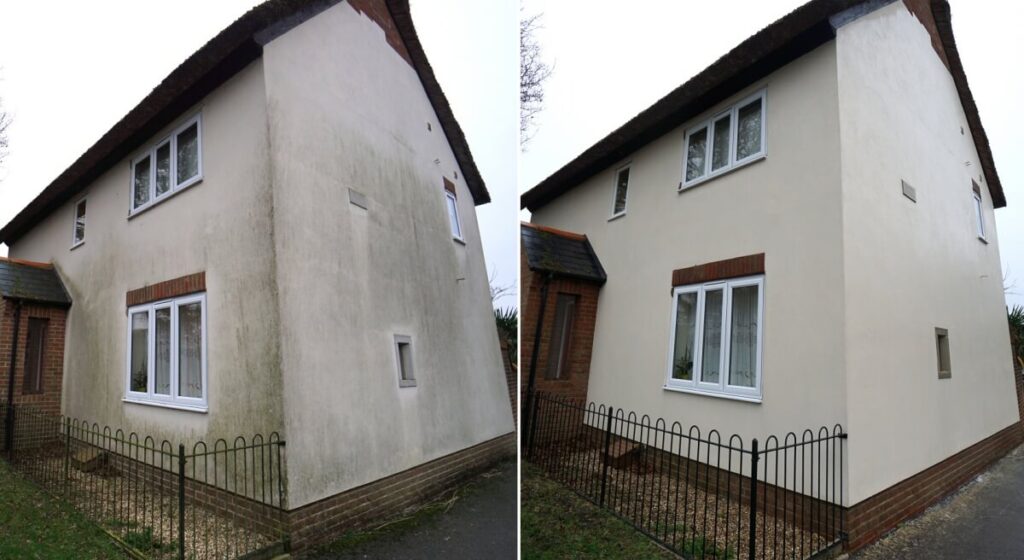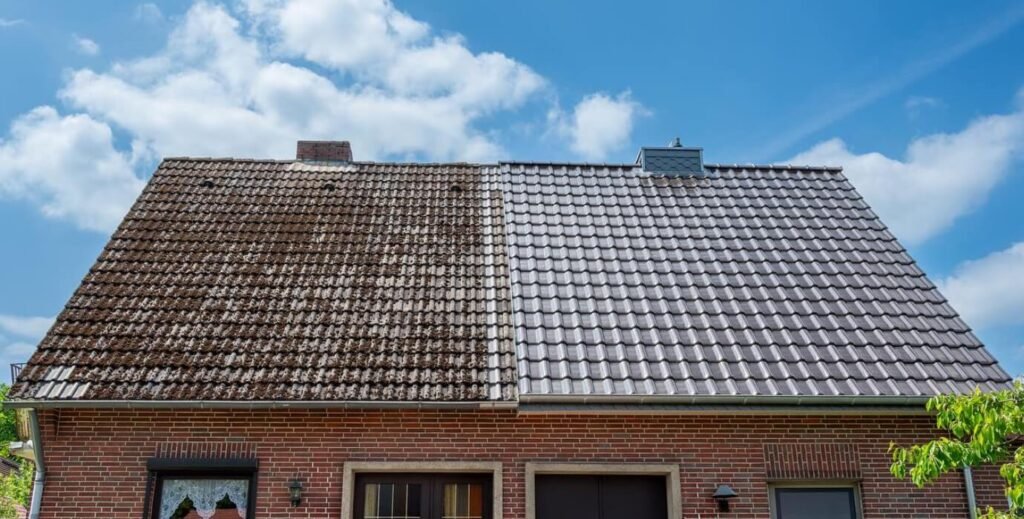



Over time, roof tiles naturally collect moss, algae, dirt, and debris, not only making your home look tired, but also putting your roof’s durability at risk. Regular cleaning doesn’t just restore the original look of your property, it helps prevent damage, leaks, and costly repairs in the long run.
The right cleaning approach depends on the type of tiles you have and their current condition. In this step-by-step guide, we’ll show you how to clean roof tiles safely and effectively, keeping your roof strong, spotless and ready to face the elements all year round.
Identify your roof tile material

Before you start cleaning, it’s important to know what type of roof tiles you have. The most common materials are concrete, clay, slate and composite tiles, each with its own level of durability and cleaning requirements.
– Concrete tiles are strong but porous, meaning they can absorb moisture and develop moss or lichen faster.
– Clay tiles are more delicate and often need low-pressure or soft washing to avoid cracks or colour fading.
– Slate tiles are durable and naturally resistant to algae, but still benefit from gentle cleaning.
– Composite or synthetic tiles can vary widely in composition, so always check the manufacturer’s care recommendations.
Tip: Before cleaning, review your roof’s warranty or the manufacturer’s guidelines. Some warranties can be voided if high-pressure washing or harsh chemicals are used incorrectly.
Inspect before cleaning

Before you begin, take time to visually inspect your roof. Look for cracked or broken tiles, moss or algae buildup, discolouration, and any signs of leaks or water damage. These issues can worsen if pressure or chemicals are applied directly on damaged areas.
If your roof has loose tiles, heavy moss growth, or visible structural problems, it’s safer to call a professional roof cleaning or repair specialist before attempting any DIY work.
For a basic inspection and cleaning setup, make sure you have a stable ladder, protective gloves and non-slip footwear. Always prioritise safety, never step on steep or fragile sections without proper support or safety gear.
Safe cleaning methods

Cleaning roof tiles should be done carefully, using the right techniques for each type of dirt and material. Here are the safest methods you can us
Gentle washing and manual cleaning
For light dirt, dust or dry leaves, a soft brush and clean water are often enough. Manual cleaning helps you avoid damaging the tiles, especially those made of clay or porous material.
Avoid using high pressure, as it can crack or displace the tiles and damage their protective layer.
Low-pressure washing
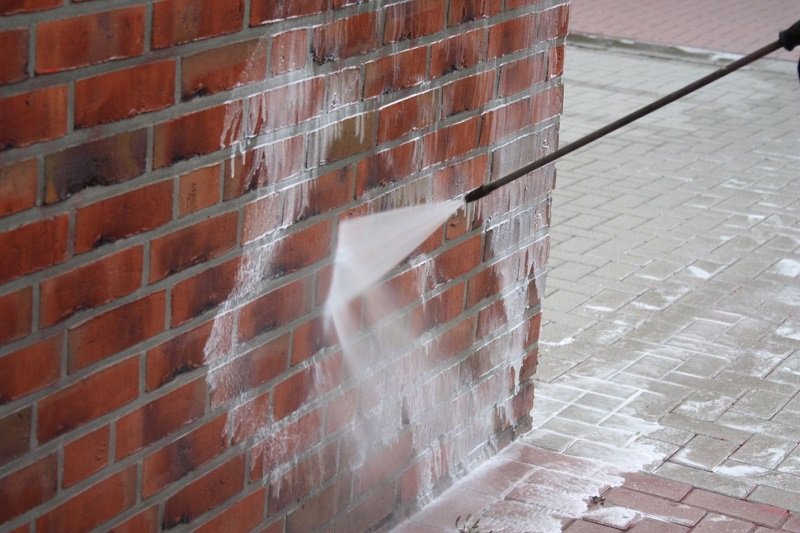
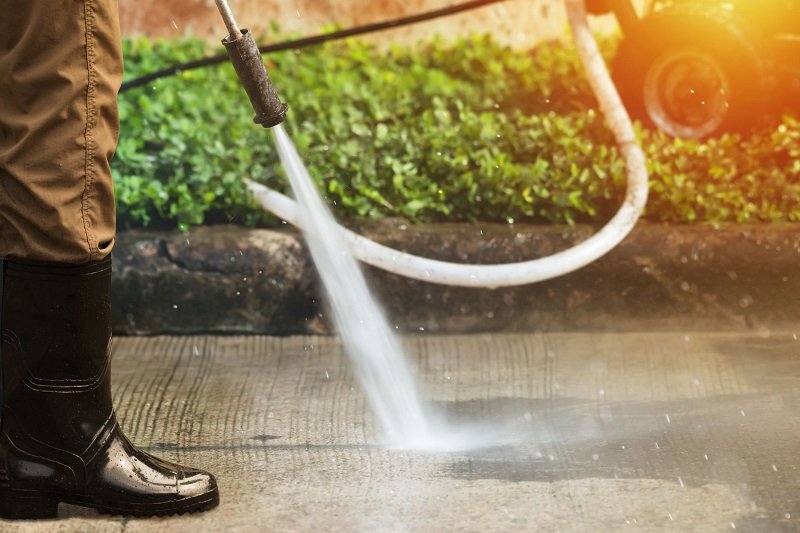
If the roof is more soiled, you can use a controlled low-pressure washing system. Adjust the water jet so that it’s strong enough to remove dirt but gentle enough not to damage the surface.
Hold the lance at a slightly downward angle and avoid directing the jet under the tiles to prevent water infiltration or lifting the sheets.
Always clean from top to bottom, in parallel lines, for an even result.
Chemical or biocide treatments
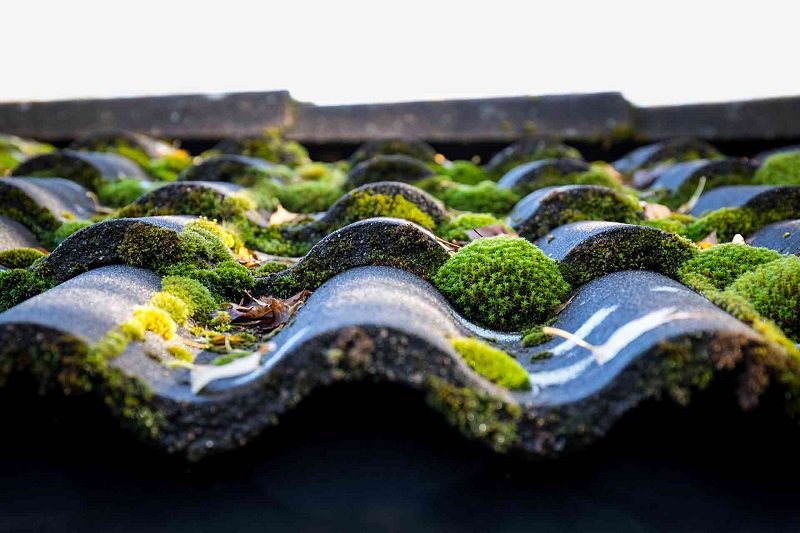
For moss, algae, and lichen, use specially designed roof cleaning solutions. These are applied with a sprayer, left to act according to the instructions, and then gently rinsed with clean water.
Avoid products containing strong acids or corrosive substances, as they can discolour or damage the tile material.
Preventing moss and algae regrowth

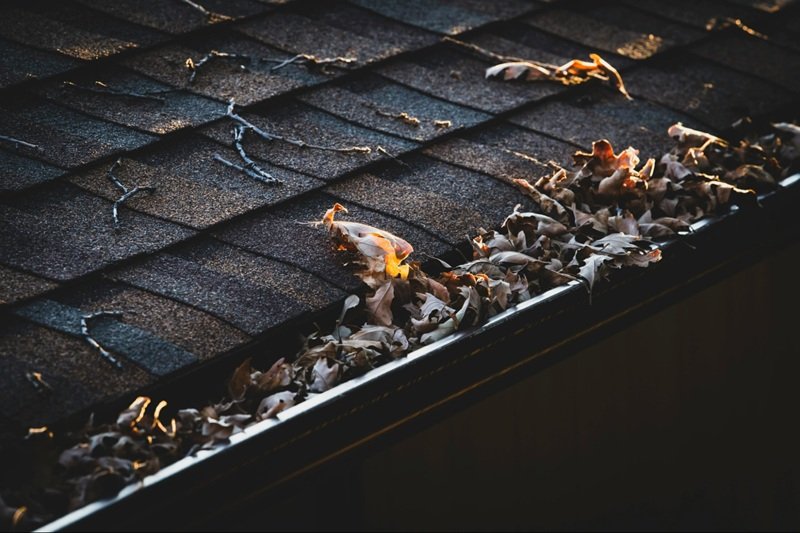
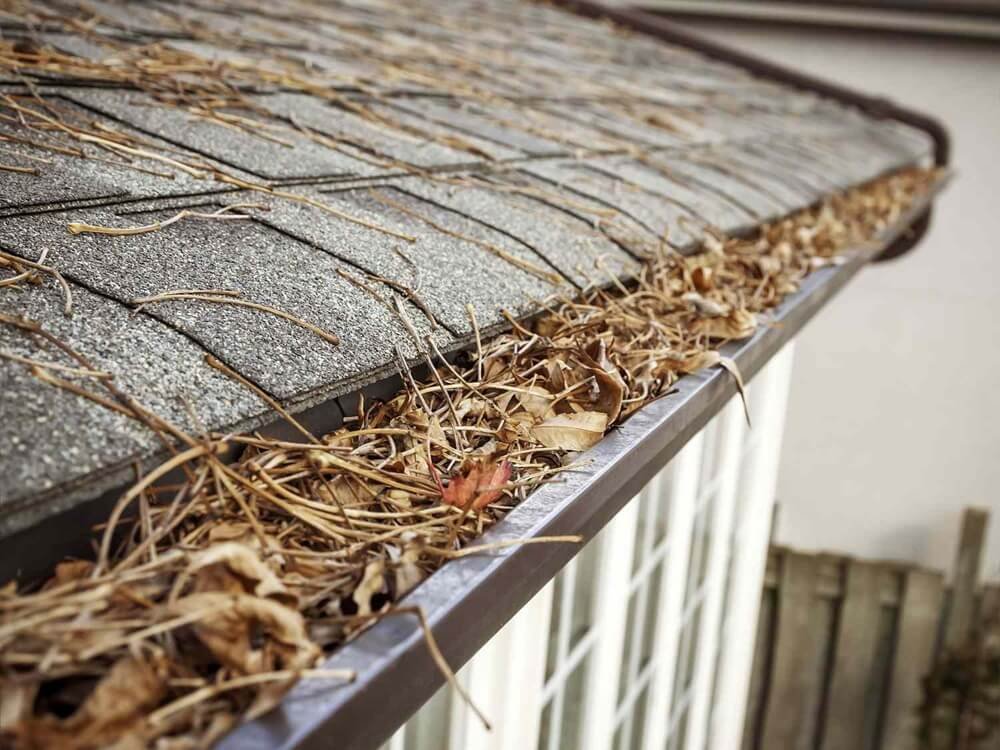
Moss, algae, and lichen build-up usually appear in damp, shaded areas with poor air circulation. Fallen leaves and organic debris retain moisture, creating the perfect environment for these organisms to grow.
To prevent them from coming back, it’s important to maintain your roof regularly:
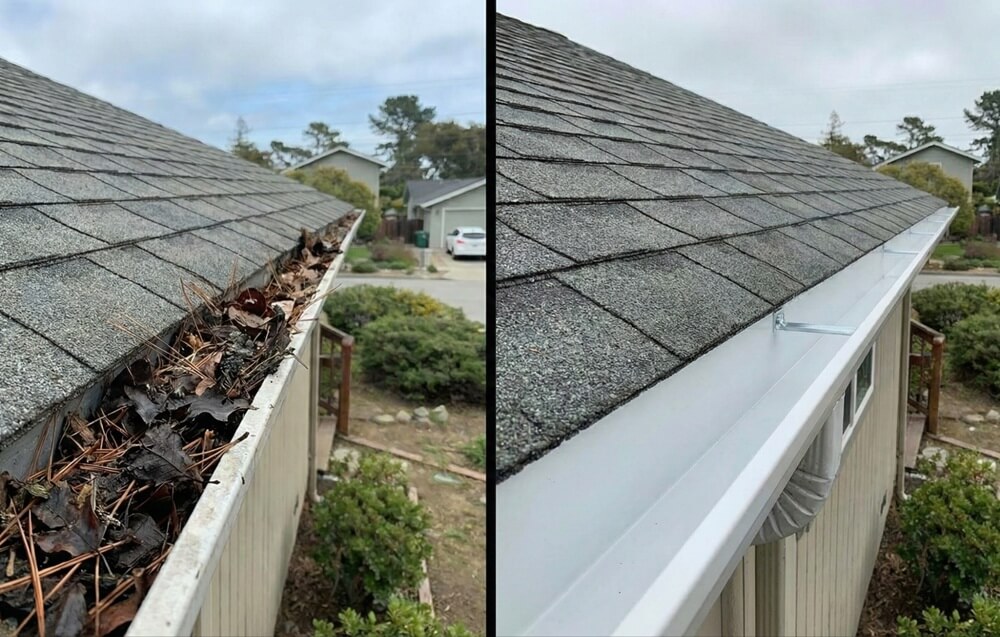
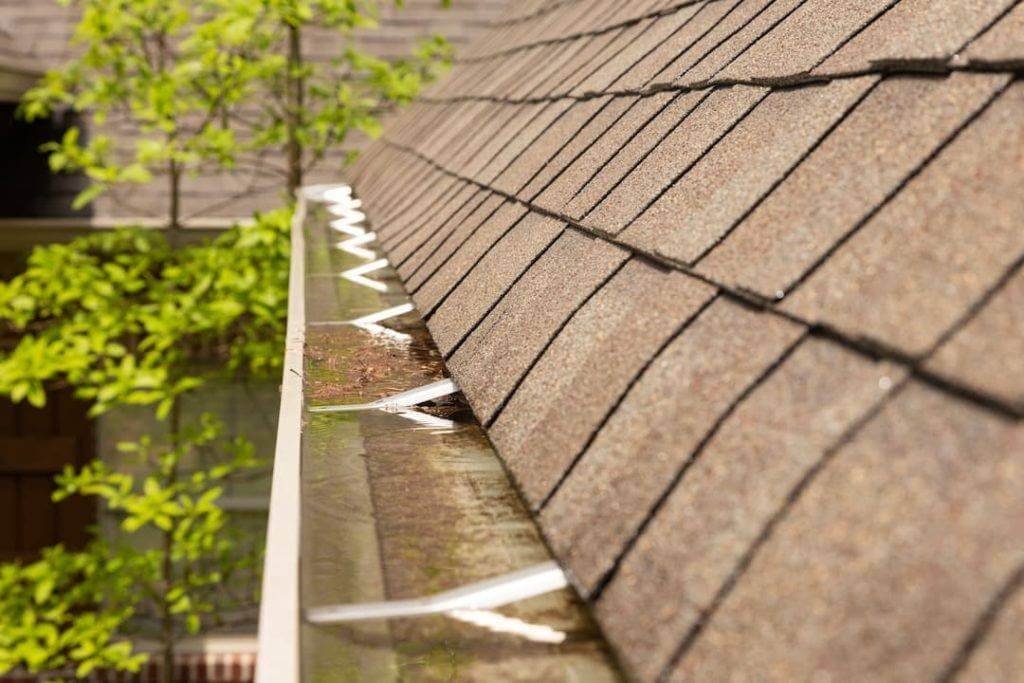
– Clean the gutters and downpipes to allow proper water drainage.
– Trim overhanging branches that shade the roof and trap moisture.
– Ensure good ventilation around the roof area to reduce humidity.
After cleaning, you can apply a protective sealant compatible with your roof material to help repel water and slow down future growth.
What not to do when cleaning roof tiles

To avoid damaging your roof or putting yourself at risk, here are some common mistakes you should avoid:
– Using too much pressure can crack, dislodge, or break the tiles.
– Walking directly on fragile tiles can easily cause them to crack under your weight.
– Cleaning without proper safety equipment is extremely dangerous, especially on a wet or slippery roof.
– Using the wrong cleaning products, such as acids or concentrated bleach, can discolour or damage the tile surface.
Signs you should hire a roof cleaning expert

There are times when your roof needs more than a simple clean. If you notice cracks, leaks, hard-to-reach areas, or heavy moss and algae build-up, it’s best to leave the job to a professional.
The Bristol Blast Away team is fully equipped to handle these situations, using professional equipment, safe cleaning solutions for all types of tiles and methods that follow the highest safety standards. We also provide the assurance of a durable, damage-free result every time.
To keep your roof in top condition, we recommend scheduling a professional inspection once a year, especially before the wet or cold season, helping you prevent costly problems and extend your roof’s lifespan.
FAQs
What is the safest way to clean roof tiles?
The safest way is to use a soft brush and clean water or a low-pressure washer. Avoid harsh chemicals and high-pressure cleaning, as they can damage or dislodge the tiles.
How often should roof tiles be cleaned?
Most roofs should be cleaned every 1-2 years, depending on the local climate and the amount of moss or debris buildup.
Can pressure washing damage roof tiles?
Yes, if done incorrectly. Using too much pressure or spraying directly under the tiles can crack or lift them, leading to leaks or water damage. Always use controlled, low-pressure cleaning.
How can I prevent moss buildup?
Keep your roof dry and ventilated by cleaning gutters, trimming overhanging branches, and removing leaves or debris. Applying a biocide treatment or protective sealant can also help slow down regrowth.
Should I seal my roof tiles after cleaning?
Yes, applying a compatible roof sealant can help protect the surface, reduce moisture absorption, and extend the lifespan of your tiles, especially in damp or shaded areas.